


Bitcoin Drops Below $60K, Silver Crashes 30%, and the Fed Changes Hands — Weekly Crypto News
February 2026 delivered one of the most violent sell-offs in crypto history. In just a few days, Bitcoin went from trading near $77,000 to briefly dropping under $60,000 — a staggering 52% decline from its October 2025 all-time high of $126,000.This wasn't a crypto-specific failure. There was no major exchange collapse
CryptoUnity
Editorial
Published 7 mo. ago
7 minute read
February 2026 delivered one of the most violent sell-offs in crypto history. In just a few days, Bitcoin went from trading near $77,000 to briefly dropping under $60,000 — a staggering 52% decline from its October 2025 all-time high of $126,000.
This wasn't a crypto-specific failure. There was no major exchange collapse, no stablecoin depeg, no hack. Instead, a combination of macroeconomic shocks, a surprise Fed Chair nomination, and a historic 30% crash in silver triggered a massive deleveraging event across all risk assets.
Let's unpack what happened 👇
Trump Nominates Kevin Warsh as New Fed Chair — Markets Panic
On January 30, 2026, President Trump surprised markets by nominating Kevin Warsh — a former Fed Governor known for hawkish monetary views — to replace Jerome Powell as Federal Reserve Chair starting May 2026.
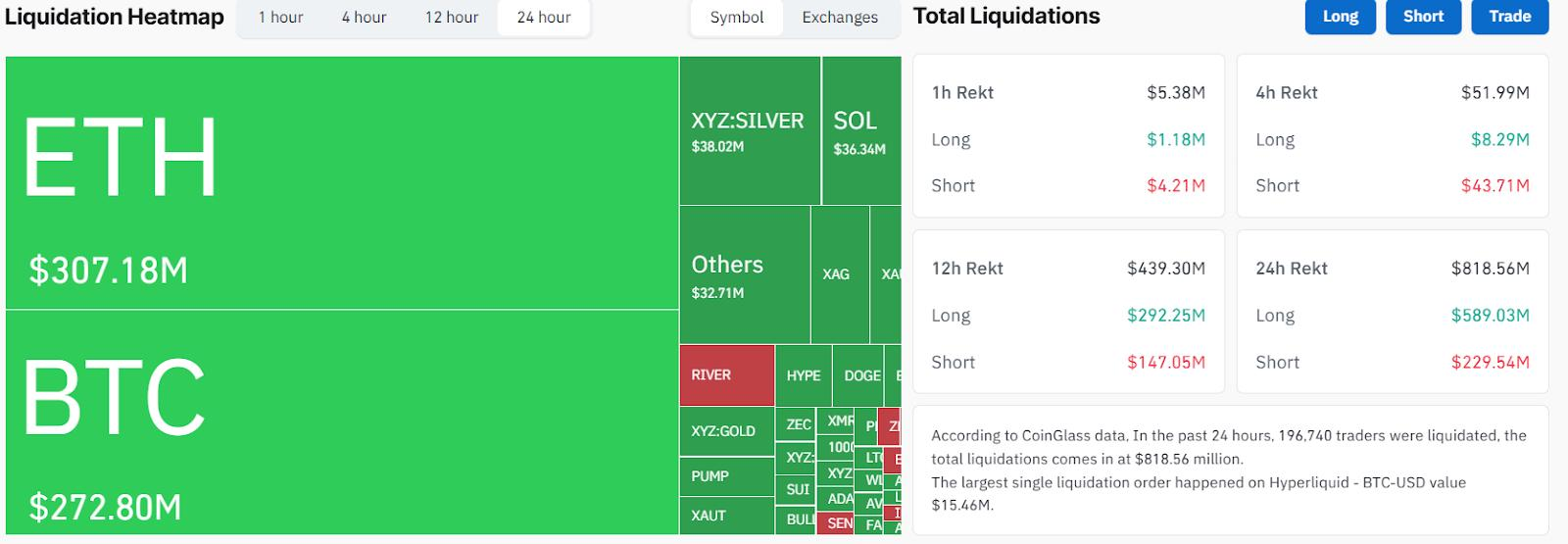
The reaction was immediate. Bitcoin dropped 6% within hours of the announcement. The U.S. dollar surged to near four-year highs. Stocks turned red. Over $1.4 billion in bullish crypto positions were liquidated in a single 24-hour window.
Why the panic? Warsh built his reputation on three ideas markets don't love: tighter monetary policy, higher real interest rates, and a smaller Fed balance sheet. All three are historically bearish for risk assets like Bitcoin.
There's a twist though — Warsh himself is no stranger to crypto. He's invested in Bitwise Asset Management (one of the major spot Bitcoin ETF providers), served as an adviser to Electric Capital (a crypto-focused VC firm), and once told CNBC: "If you're under 40, Bitcoin is the new gold."
But markets reacted to his hawkish reputation, not his personal holdings. And once fear took over, the dominoes started falling.
Beginner takeaway: 🏦 Fed leadership changes matter more than you think. The chair doesn't just set interest rates — they shape liquidity conditions for every market on earth. And when liquidity tightens, risk assets usually move first.
Caption: Kevin Warsh, former Fed Governor, was nominated as Jerome Powell's successor. Source: Cointelegraph
Silver Crashes 30% — The Trigger Nobody Saw Coming
On January 31, silver experienced its worst single-day crash since 1980, plunging nearly 30%. Gold fell 9% in the same session. These are assets that normally act as safe havens — and they were falling together.
Why does this matter for Bitcoin? Because when all hard assets sell off at once, it signals something bigger than crypto: a full risk-off event driven by forced liquidation. The strengthening U.S. dollar made every dollar-priced asset — from silver to gold to Bitcoin — suddenly more expensive for international buyers.
Bitcoin followed. On February 5, it registered one of the fastest single-day crashes in its entire history — a -6.05σ move on VanEck's rate-of-change index. In simple terms: statistically, this was a once-in-several-years kind of drop.
The damage was visible in ETF flows. After strong inflows in early January, spot Bitcoin ETFs posted $1.61 billion in outflows for the month — their second-worst month on record. By February 6, Bitcoin had briefly touched $60,062 before bouncing back above $70,000.
Beginner takeaway: 🛑 Crypto doesn't crash in isolation. When gold, silver, and Bitcoin all drop together, the problem isn't crypto — it's global liquidity. Understanding macro gives you a massive edge over headline-only investors.
Caption: Gold, silver, and Bitcoin all fell together as the dollar surged. Source: Cointelegraph / CoinDesk
The Whale Signal — Small Investors Sold, Mega-Whales Bought
Here's where things get interesting. While retail investors panicked, the biggest Bitcoin holders did the opposite — they bought.
According to Glassnode data, "small fish" wallets (holders with less than 10 BTC) had been persistently selling for over a month, spooked by a 35% drop from the October peak. Meanwhile, "mega-whales" (wallets holding 1,000+ BTC) were quietly accumulating — their stacks reaching levels not seen since late 2024.
Data for Q1 2026 told the same story: businesses purchased 69,000 BTC, governments bought 25,000, funds and ETFs added 3,000 — while individual retail investors were the biggest net sellers.
This pattern — retail capitulating at the lows, while institutions accumulate — is one of the oldest signals in finance. It's also one of the hardest to follow emotionally. When your portfolio is down 40% and the news is all red, buying is the last thing you want to do.
Beginner takeaway: 🐋 "Smart money" isn't smart because they predict tops and bottoms. They're smart because they do the opposite of the crowd at extremes. Your best tool in a panic isn't a chart — it's discipline.

Caption: Whale wallets accumulated Bitcoin while retail traders capitulated. Source: Glassnode / Cointelegraph
Bitcoin Bounces Back — But Uncertainty Remains
By February 7, Bitcoin had clawed back above $70,000, closing more than 11% higher on the day. It was one of the most violent bounces in years.
But the broader mood didn't fully recover. Through the rest of February, BTC traded in a volatile range between $60,000 and $72,000. Analysts were split: some called for a multi-month bottoming process with a possible dip toward $50,000, while others argued the worst was already behind us.
One of the key dynamics was forced ETF selling. Spot Bitcoin ETFs now hold roughly 6% of all Bitcoin in existence. When investors redeem shares, the funds must sell real BTC on the open market — mechanically. That created selling pressure no amount of long-term holder conviction could offset in the short term.
Still, by the end of February, BTC was stabilizing. Fear was at extreme levels. Liquidity had been wiped out. And in markets, that kind of reset often precedes the next leg higher.
Beginner takeaway: 💪 Violent drops shake out weak hands and force leverage to reset. That reset is usually what builds the foundation for the next recovery. The worst feeling in investing — deep fear — is often the best opportunity.
Closing Thoughts
February 2026 was a test of discipline for every crypto investor. A sudden Fed nomination, a historic silver crash, and billions in ETF outflows combined to push Bitcoin to levels many thought were behind us.
But under the surface, the story was different. Whales kept buying. Corporations kept accumulating. Institutions kept treating dips as opportunities. Retail was the one capitulating — as usual.
For beginners, the most important lesson of February is this: crashes are where long-term fortunes are made — or destroyed. If you sold in panic, you locked in losses. If you bought consistently through the drop, you accumulated at prices most investors would kill for six months later. The market rewards patience. Don't let one bad week erase a 5-year plan. 🚀
This article does not contain investment advice or recommendations. Every investment and trading move involves risk, and readers should conduct their own research when making a decision.
Try this in the CryptoUnity app
Set up a weekly auto-purchase in about two minutes, and start with 0% trading fees for 30 days.
Download the appRead next

Market News
Bitcoin stalls below $65,000 while ETF money quietly returns — what actually moved this week
A $114 million hardware wallet hack, the best ETF inflow week since April, and a market that refuses to move in either direction. This week had three stories that matter to beginners — and one warning from EU regulators that you should read before anything else. We explain each one calmly, in plain language, and show what it means for you.

Education
Why do crypto prices move so much?
It's the question every beginner asks after their first week: why does the number keep moving? The answer isn't "because crypto is crazy" — it's four specific mechanics, and once you know them the movement stops feeling random. No jargon, no predictions, just how the machine actually works.

Education
How much money do you actually need to start with crypto?
"I don't have enough money" is the most common reason people put off starting. And it's almost always wrong. We explain why the entry barrier isn't what you think, why starting small is actually smarter than starting big, and how to work out the amount that lets you sleep at night. No jargon, no pressure.